
Global Financial Crisis Explained - With Greed Comes Irrational Decisions
Liam Scotchmer
References underlined and listed below.
4 Minute Read
“For greed, all nature is too little.” - Seneca
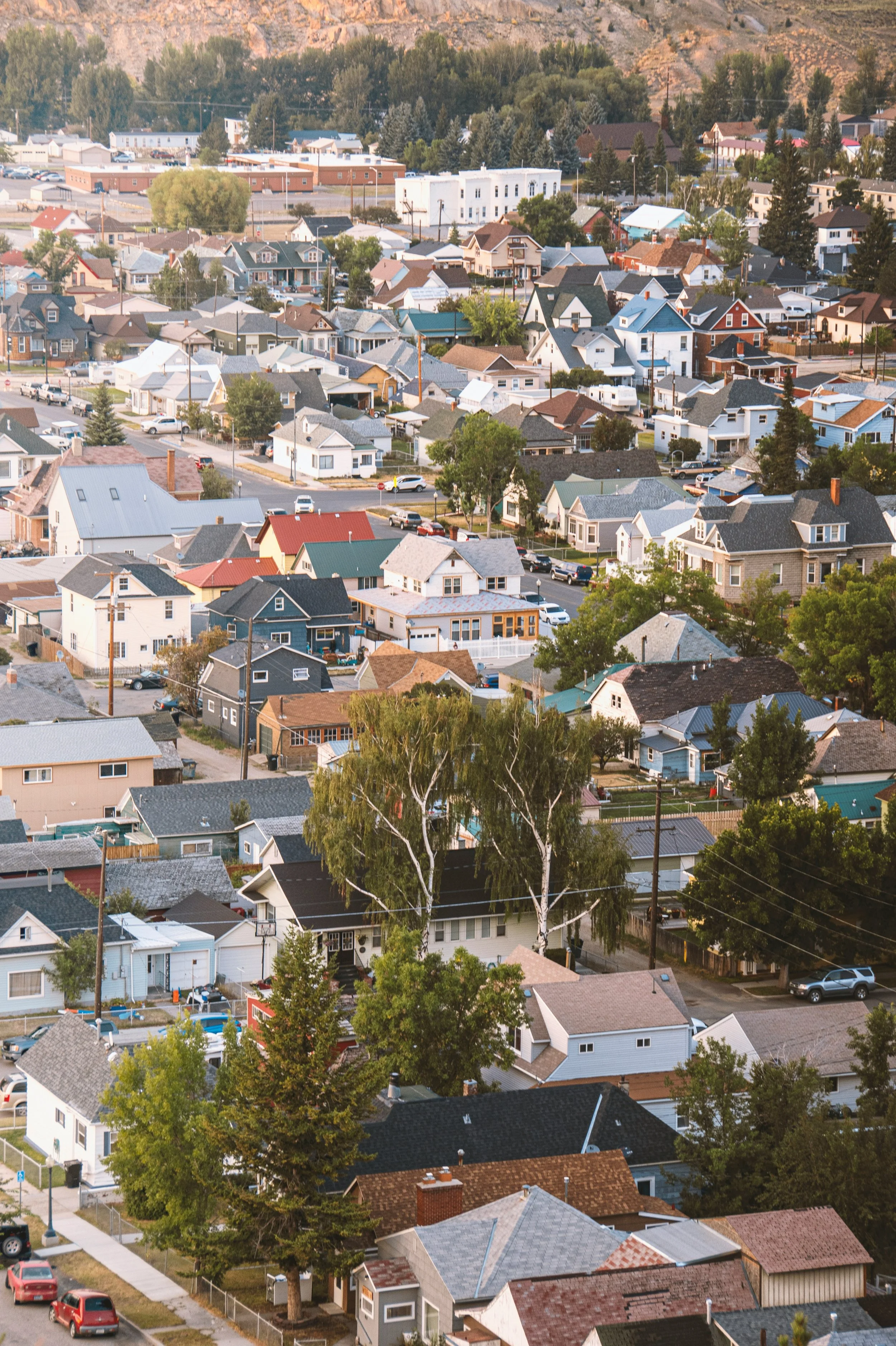
The front cover photo depicts a picturesque neighbourhood. I wish I could say the same about the cloaked inner workings of the secondary mortgage market. Mortgages issued to subprime borrowers were aggregated, securitised, tranched and leveraged by major financial players. This was the creation of many toxic and complex financial instruments, and the beginning of a crisis. In 2008, the global housing market collapsed, the labour market weakened, investment banks and investors suffered huge losses and interbank lending froze. The fragility of international markets was exposed, and for worse, greed, skewed incentives, risk taking and leverage did the work. People lost homes, toxic securities became worthless to investors, government credibility was eroded, and uncertainty has appreciated ever since.
Before continuing, consider reading my article on mortgage-backed securities and collateralised debt obligations here.
To recap (and a slight oversimplification): a mortgage backed security (MBS) is a pool of mortgages sold to investors. A collateralised debt obligation (CDO) is a combination of debts, including mortgages, but sliced into “tranches”. Each tranche has a different risk level, coupon rate and payment hierarchy.
Recap
In May of 2000, the FED reduced the interest rate from 6.5% in May 2000, to 1% in June 2003, which meant easier borrowing for households and for investors looking to make short term profits by flipping homes. Furthermore, expectations of rising house prices also fuelled more borrowing on the buyer sider. It was the same case in parts of Europe! Borrowers incomes were also overstated… fraud. This would later mean individual borrowers would not be able to repay such large loans, making them very fragile to interest rate changes
Homeowners & Investors
Banks were happy to hand out subprime mortgages even to high risk borrowers. “[Borrowers] often had no or very low down payments, and many didn’t require proof of income.” According to the RBA (2025), banks were incentivised to continue to hand out mortgages for various reasons, including heightened competition between lenders who also didn’t expect to bear any losses (as mortgages were sold to investors as MBS), and without the demand for MBS and CDOs, “lenders would not have been able to [originate] so many loans to subprime borrowers”. Sales of CDOs went from $30 billion in 2003 to $225 billion in 2006. CDOs exploded in popularity, even internationally! There was all of this demand for MBS because of their higher returns, more than what other economies could achieve domestically, and more than US treasury bills.
“There was little government regulation of this market, and ratings agencies could make investing in these mortgage-backed securities look attractive and low-risk to investors.”
To top things off, for banks, the SEC became more lax on regulations. Whilst the SEC was created to protect investors and markets, in October 2004 they relaxed the net capital requirements for five major investment banks, including Goldman Sachs, Lehman Brothers and Bear Stearns. “This fueled greater risk-taking among banks and freed them to leverage their initial investments by 30 times or even 40 times.”
Everyone was celebrating. It was a great time, for banks (more sales!) borrowers (new home!), and investors (income!).
However, because of regulatory and reserve requirements, banks were at an impasse: with so much lending, too much risk and mortgages were on the books which meant no way forward. However, with greed comes irrational decisions. Banks used securitisation and off balance sheet vehicles to get around government regulations and reserve requirements through a few methods:
The Banks
One example is the shadow banking community, which includes hedge funds, private equity firms.. and special purpose vehicles (SPVS)! These shadow banks were not subject to regulatory oversight. Normal banks would originate lots of mortgages, and then sell these mortgages to an SPV, and the SPV made money by issuing MBSs or CDOs to investors. This got money off the books of banks and into other companies, so normal banks could offer more mortgages.
Special Purpose Vehicles
CDO squared & cubed
A second example was increasing the complexity of CDOs through CDO squared and CDO cubed to disrupt the connection between the CDOs and the real mortgages.
CDO squared is made up of the middle tranches of several regular CDOs rather than being directly tied to real mortgages.
CDO cubed goes even further. It’s built from tranches of CDO squareds!
”By this point, the returns investors were drawing were three times removed from the underlying commodity, which was often home mortgages.”
This meant it was nearly impossible to see how risky the CDOs really were because the underlying loans had been sliced, repackaged and layered so many times that the true exposure to bad mortgages was hidden inside complex, misleading AAA ratings.
”CDOs were not the sole cause of the 2008 financial crisis, but they played a pivotal role in its development by magnifying risks in the mortgage market.” (Investopedia Team, 2026)
The Financial Crisis Unfolded
By 2004 almost 70% of the population owned homes. At the same time, in 2004 the FED began hiking rates over 2 years to 5.25%, where it stayed until August 2007. This was of real concern for home buyers because they suddenly had higher borrowing costs, especially for those on variable rate mortgages, who had rising costs, but falling home value.
Early 2006, home prices began to fall. This was bad because homeowners went “underwater”, meaning the amount they borrowed was more than their homes were now worth (when you’re underwater, you can’t easily refinance). Millions of homeowners defaulted on their mortgages, with unemployment reaching 10% (optimal is 3-4%) and 3.8 million Americans losing their homes.
On the investor side, which included not only US institutions and investors, but financial firms globally, the CDO bubble had popped, all backed by subprime mortgages. ”As millions of homeowners defaulted, CDOs failed to reach their middle and upper tranches, CDO-squared and CDO-cubed investors lost money on so-called "riskless" investments.” CDOs were the worst performing asset between 2007-2009.
It became very stressful internationally especially after the fall of Lehman Brothers in September of 2008. “This triggered a panic in financial markets globally.” Investors started pulling their money out of banks and funds. Thus, financial markets became “dysfunctional” as everyone tried to sell at once, as said by the RBA (2025).
The interbank market also froze due to uncertainty.
The Great Recession
Investment and consumption fell as businesses and individuals lost confidence, leading to the US and some other economies falling to their deepest recessions since the Great Depression, called the Great Recession.
A Weird Way To End It.
Even as early as March 2004, a participant in the Federal Open Market Committee (FOMC) expressed concern that very low interest rates could contribute to distortions in asset prices, particularly housing, beyond “an economically justified response to easy policy”. Whilst boosting asset prices is not an explicit objective of the FOMC, policymakers recognised that higher asset prices could contribute to increased consumption through the wealth effect.
Reference list
Dye, James. “Research Guides: Fixed Income Securities (Bonds): Collateralized Debt Obligations.” Libguides.nypl.org, libguides.nypl.org/c.php?g=1043575&p=7660195.
Liberto, Daniel. “The Wealth Effect Definition.” Investopedia, 27 Jan. 2021, www.investopedia.com/terms/w/wealtheffect.asp.
Kos, Mr, et al. Meeting of the Federal Open Market Committee On. 2004.
Folger, Jean. “Fannie Mae, Freddie Mac and the 2008 Credit Crisis.” Investopedia, 31 Dec. 2021, www.investopedia.com/articles/economics/08/fannie-mae-freddie-mac-credit-crisis.asp.
KAGAN, JULIA. “Mortgage-Backed Security (MBS).” Investopedia, 13 June 2024, www.investopedia.com/terms/m/mbs.asp.
Mansa, Julius. “Shadow Banking System Definition.” Investopedia, 18 Oct. 2024, www.investopedia.com/terms/s/shadow-banking-system.asp.
Nielsen, Barry. “Behind the Scenes of Your Mortgage.” Investopedia, www.investopedia.com/articles/pf/07/secondary_mortgage.asp.
Reserve Bank of Australia. “The Global Financial Crisis.” Reserve Bank of Australia, 2025, www.rba.gov.au/education/resources/explainers/the-global-financial-crisis.html.
Segal, Troy. “Are All Mortgage Backed Securities (MBS) Also Collateralized Debt Obligations (CDO)?” Investopedia, 2019, www.investopedia.com/ask/answers/040815/are-all-mortgage-backed-securities-mbs-also-collateralized-debt-obligations-cdo.asp.
Singh, Manoj. “The 2008 Financial Crisis Explained.” Investopedia, Investopedia, 25 Aug. 2024, www.investopedia.com/articles/economics/09/financial-crisis-review.asp.
Tardi, Carla. “Collateralized Debt Obligation (CDO).” Investopedia, 1 Oct. 2024, www.investopedia.com/terms/c/cdo.asp.
The Investopedia Team. “Were Collateralized Debt Obligations (CDO) Responsible for the 2008 Financial Crisis?” Investopedia, 2019, www.investopedia.com/ask/answers/032315/were-collateralized-debt-obligations-cdo-responsible-2008-financial-crisis.asp.
U.S. Securities and Exchange Commission. “SEC.gov | HOME.” Sec.gov, 5 Feb. 2017, www.sec.gov.
“Underwater Mortgage.” Investopedia, 2019, www.investopedia.com/terms/u/underwater-mortgage.asp.